
Last updated September 20, 2026
Free on-site gate assessment - hinges, posts, and your LiftMaster or Nice gate operator checked before anything is quoted
The assessment is free and the quote is the invoice.
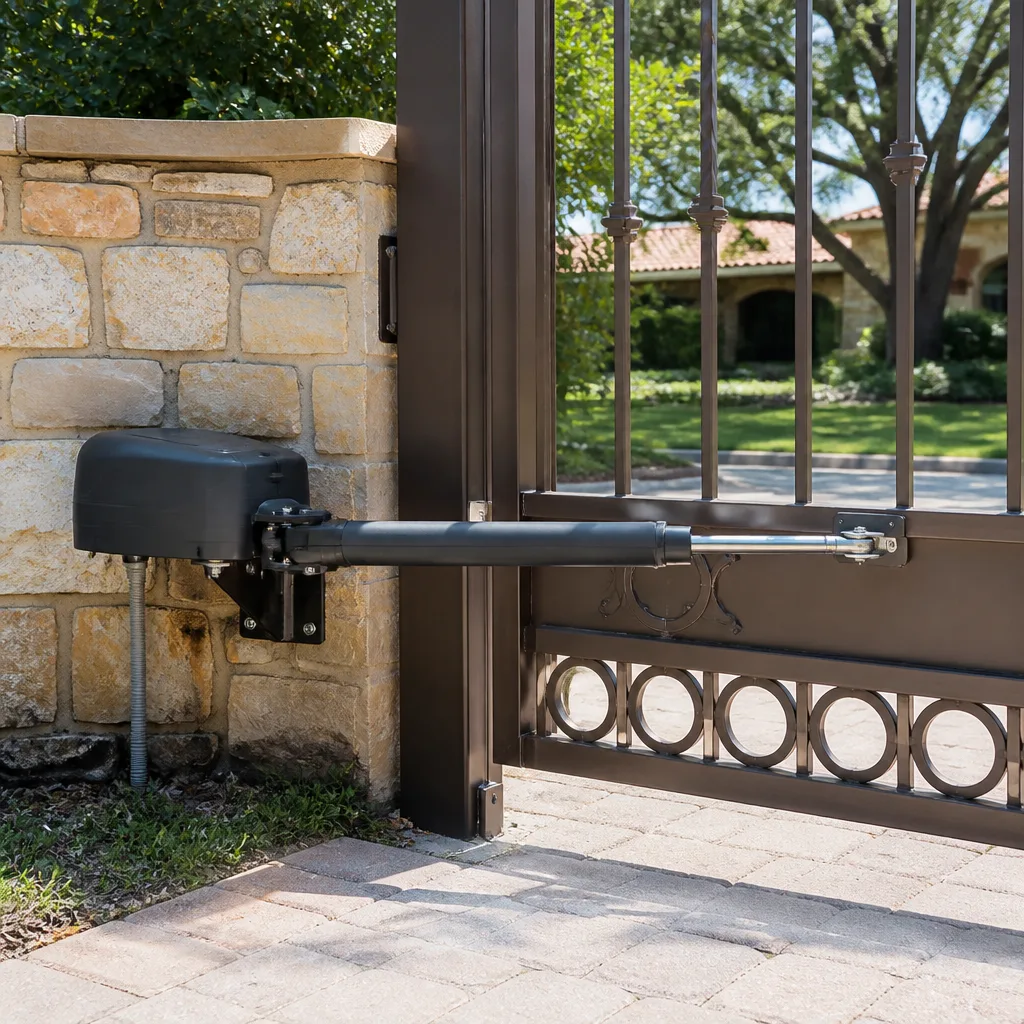
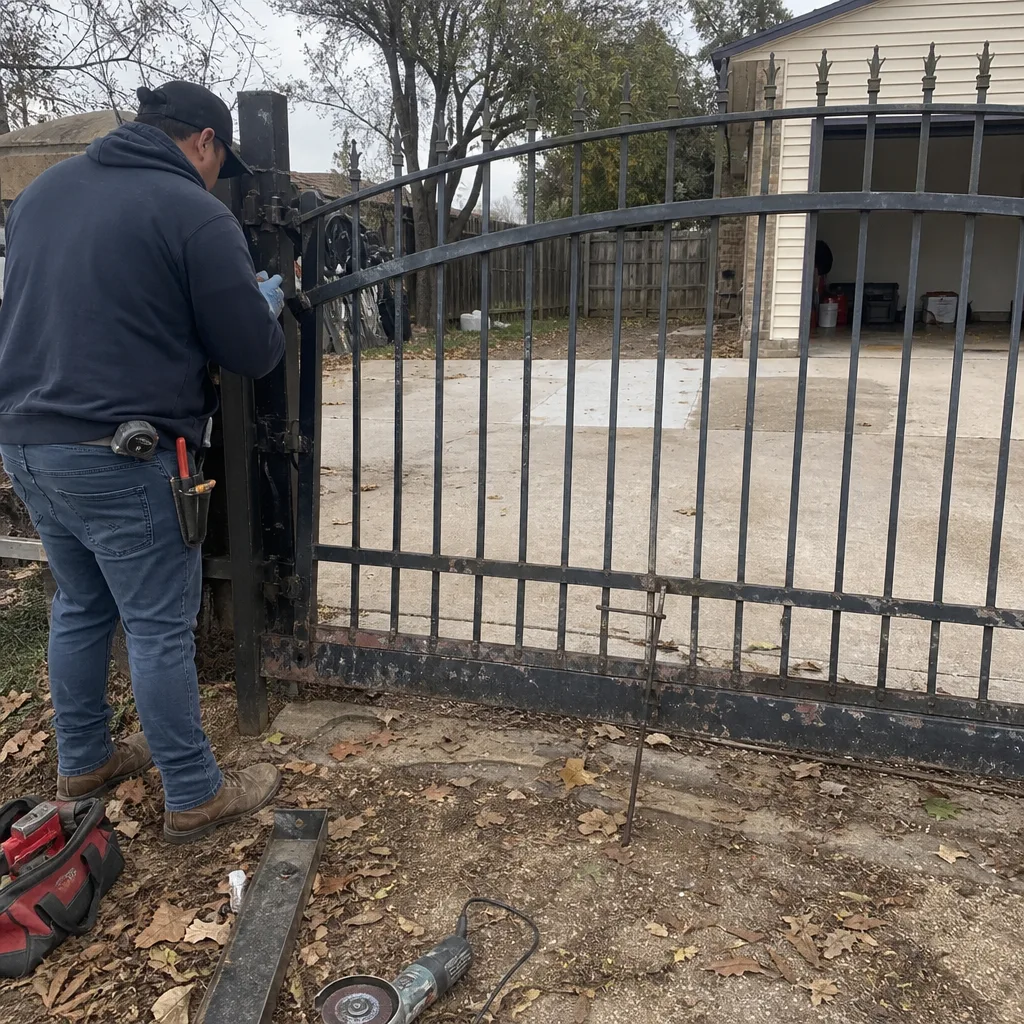 Before
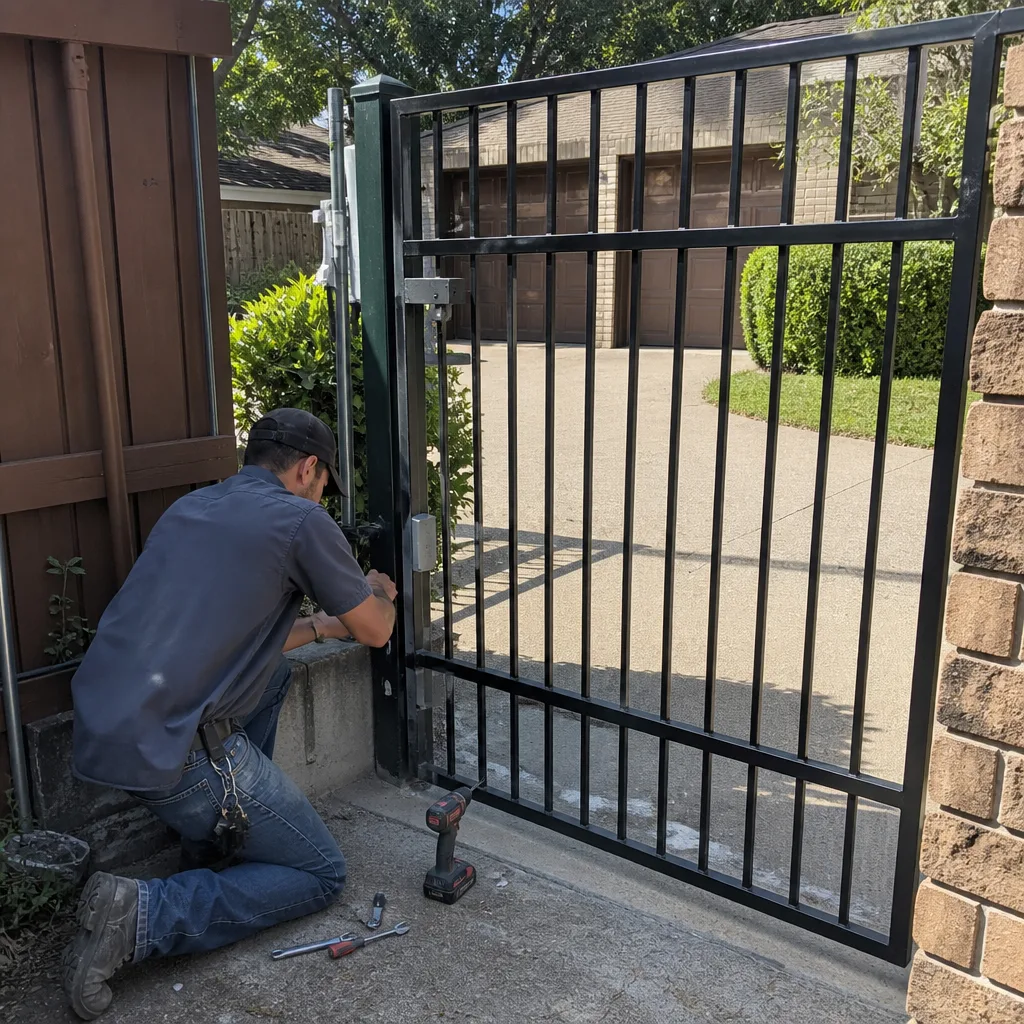 After
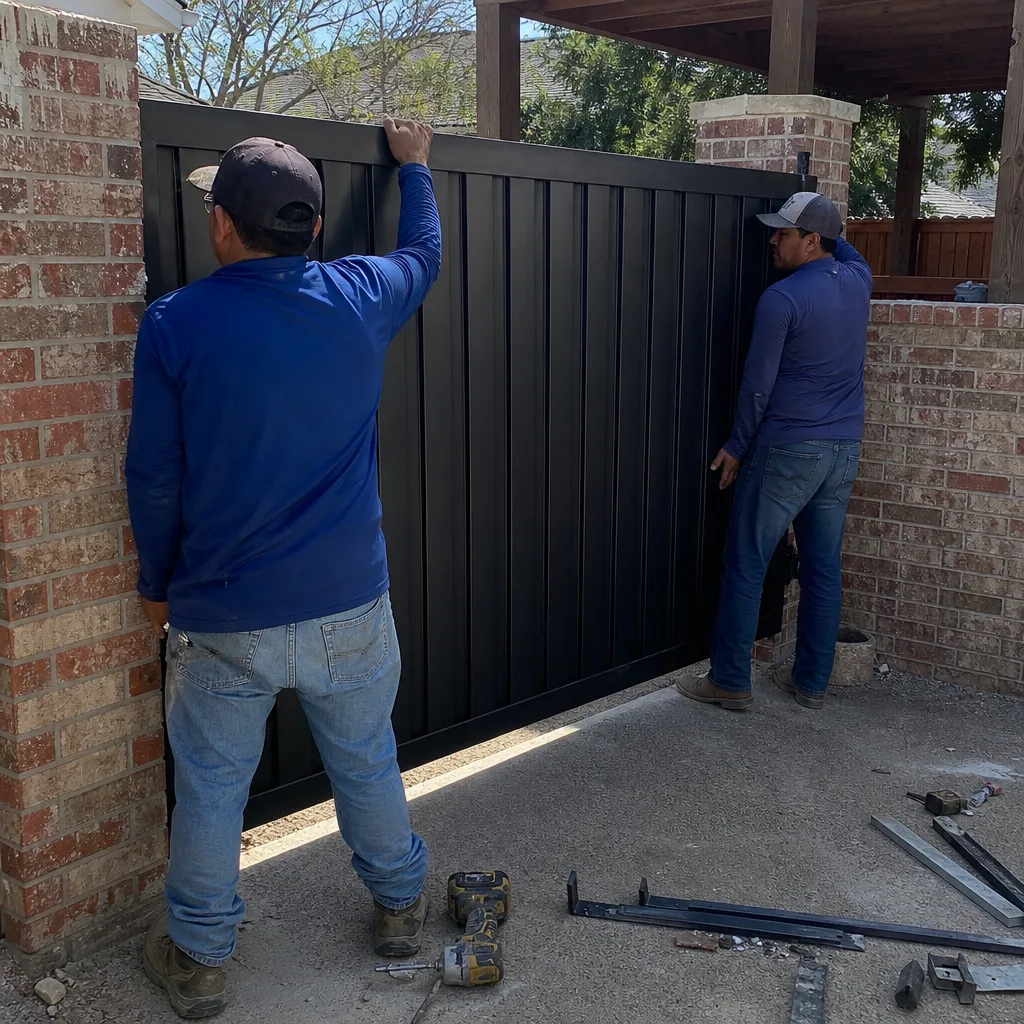
After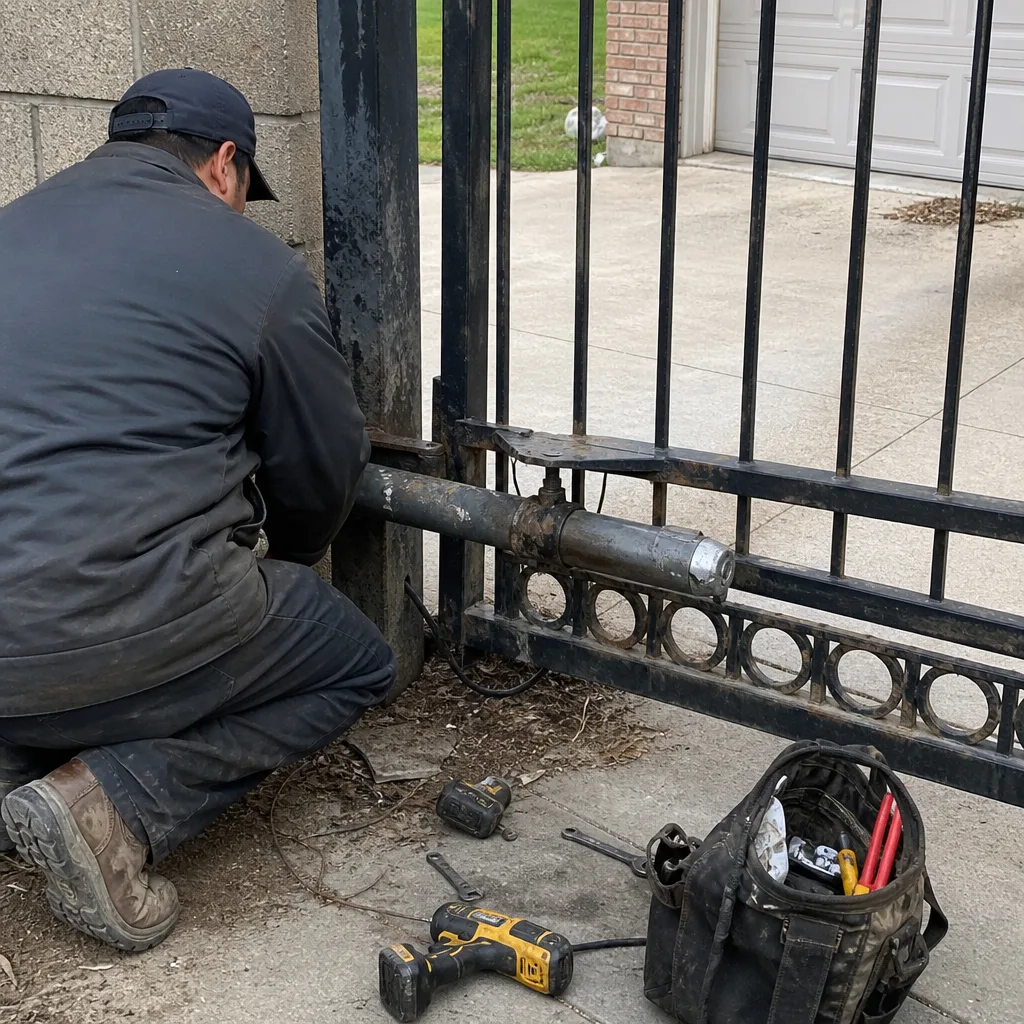 Before
 After
After Before
 After
AfterGate Repair Permits, Codes & Inspections in TX: What You Need to Know
Most homeowners in Garland assume Gate Repair is a free-for-all: if the gate is on your property, you can fix it however you want. That assumption is wrong in specific, expensive ways. Adding an automatic opener to a manual driveway gate can trigger permit requirements in Garland, and the failure to pull that permit typically surfaces years later, when you’re selling the house or filing an insurance claim after an accident. This guide maps exactly which gate work crosses the permit threshold in Texas and Garland specifically, which documentation protects you when a permit isn’t required, and how to avoid the code mistakes that cost homeowners thousands.
Quick Answer
Most residential gate repairs in Garland, TX do not require a permit: replacing hinges, welding a cracked frame, swapping a motor, or adjusting limit switches falls under routine maintenance. But post replacement, new automation on a previously manual gate, and any gate within a platted easement or right-of-way can cross into permitted territory. When in doubt, the safe move is a written work order and photo documentation, which satisfies most insurance and resale questions even when the city never gets involved.
Table of Contents
- When a Gate Repair Requires a Permit in Garland
- Adding Automation: The Hidden Permit Trigger
- Texas Accessibility Standards and Your Gate
- What Garland HOAs Add on Top of City Code
- Documentation When No Permit Was Required
- Insurance Claims and Unpermitted Gate Work
- What a Garland Gate Inspection Actually Checks
- Common Mistakes to Avoid
- When to Call a Professional
- Frequently Asked Questions
- The Bottom Line
BeforeAfterWhen a Gate Repair Requires a Permit in Garland
The City of Garland follows the 2021 International Residential Code with local amendments, and the permit triggers for gate work are narrower than most people expect. Replacing a hinge, a wheel, a motor, or a control board on an existing automated gate? No permit. Welding a cracked steel frame? No permit. Resetting a photo-eye or replacing a limit switch? No permit. The city treats these as maintenance because the gate’s footprint, height, and operating characteristics aren’t changing.
Permit territory starts when the work changes the physical structure or its relationship to the property line. These are the specific triggers we’ve navigated in Garland:
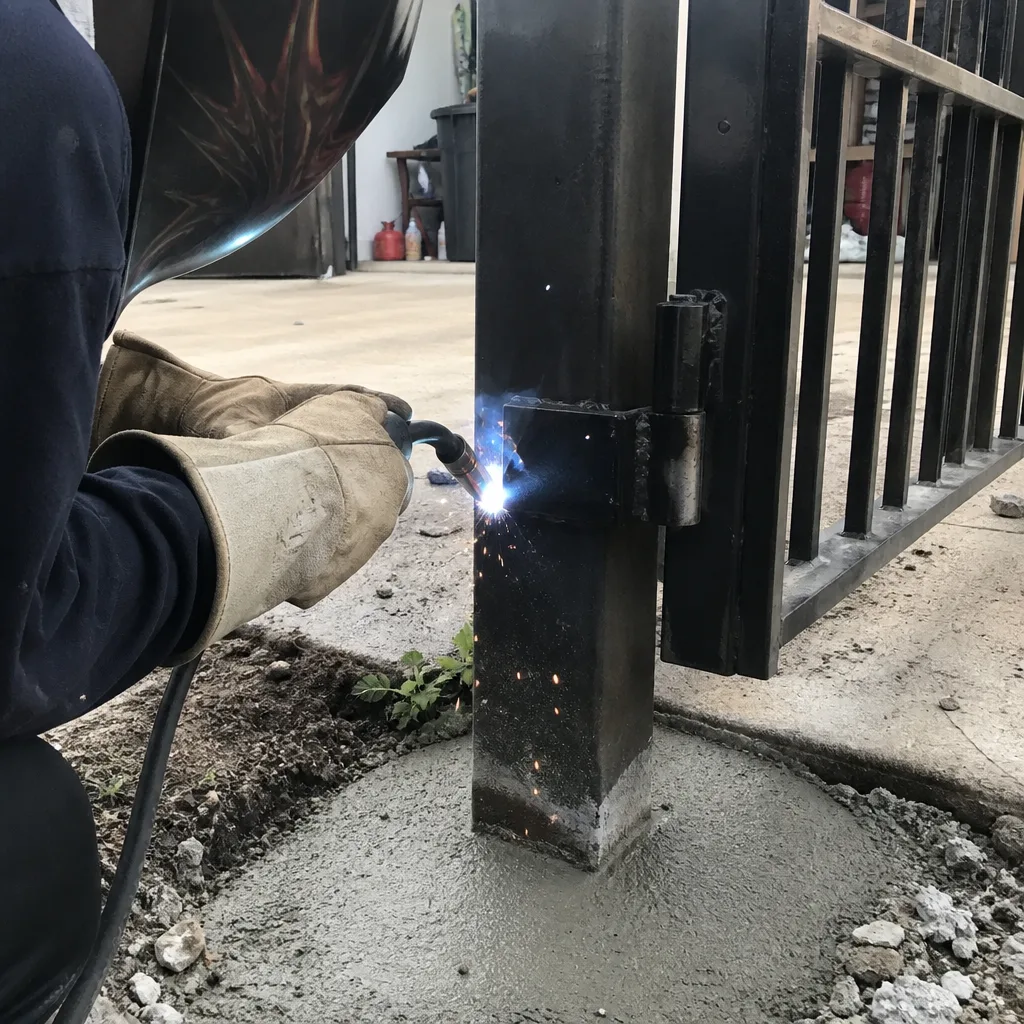
- Post replacement: If a gate post is rotted, bent, or snapped and you’re digging it out and setting a new one in concrete, the city views this as structural work. A new post changes the gate’s load path. Garland requires a fence/gate permit when a post is replaced, particularly if the post is within five feet of a property line or easement.
- New automation on a manual gate: This is the one most Garland homeowners miss. Adding an opener to a gate that was previously manual is classified as new electrical installation, not repair. It requires an electrical permit and, in some cases, a gate permit if the gate is adjacent to a sidewalk or public right-of-way.
- Property-line proximity rules: A gate that sits within a platted easement or right-of-way, even if it’s been there for years, triggers permit review the moment you alter its structure. The city wants to confirm the gate still allows utility access and doesn’t impede drainage.
- Height and setback changes: If a repair involves rebuilding the gate taller than six feet, or moving it closer to the front property line than the code allows, that’s a variance situation, not a repair.
In practice, most of the gate repairs we perform in Garland never see the city’s permit counter. The work is genuinely maintenance. But we’ve also stood next to homeowners while a code inspector explained that the new post they didn’t permit now needs an after-the-fact permit, a fee, and an inspection before the gate can be used. The threshold is real, and it’s specific.
Adding Automation: The Hidden Permit Trigger
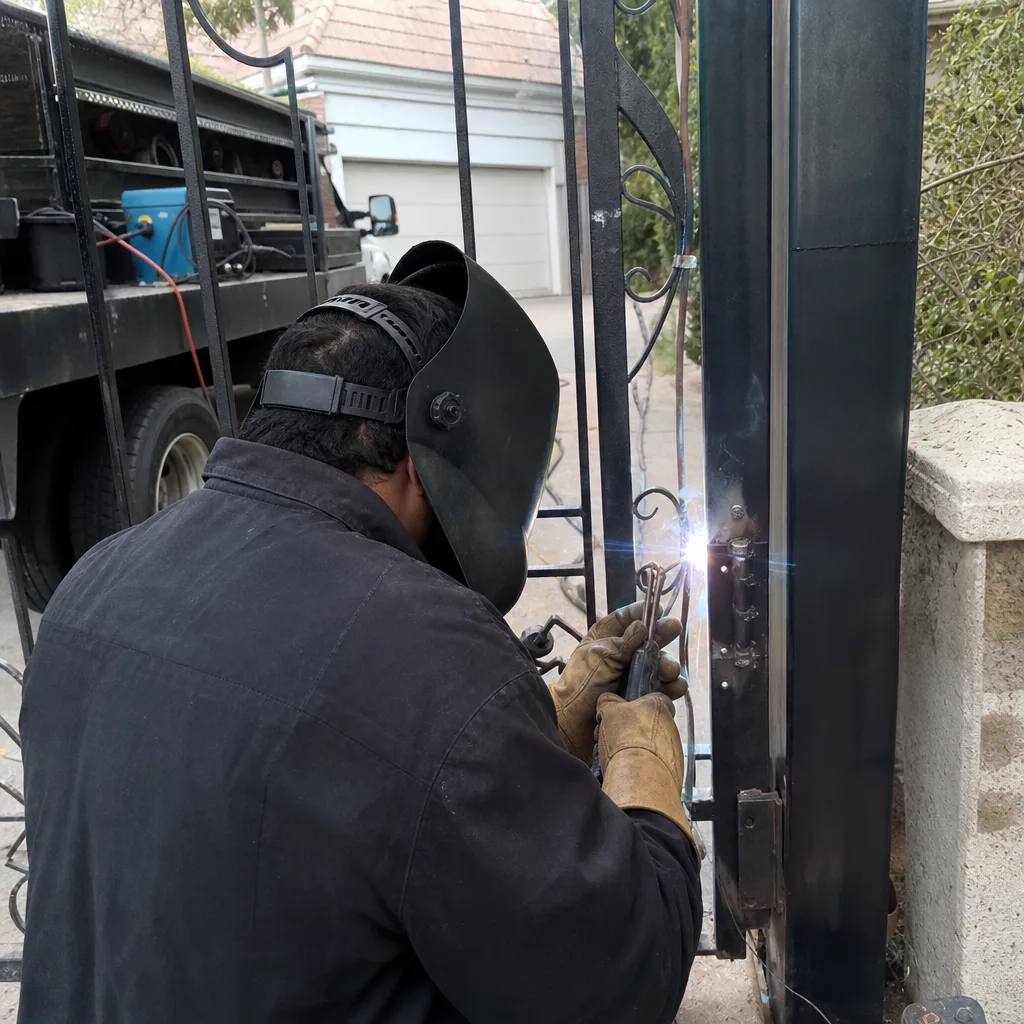
Garland homeowners who add automation to an existing manual gate are often doing permitted work without knowing it, and the gap only surfaces when they try to sell the house or file an insurance claim. For a full checklist of what to watch for, see our Gate Repair Warning Signs: A Garland Homeowner’s Reference Guide. This is the single most common permit problem we encounter in driveways across Garland, from Firewheel to the older streets of central Garland.
Here’s why automation crosses the line: a swing gate opener or slide gate operator is a permanently installed electrical appliance. It’s not a plug-in tool. It gets hardwired to a dedicated circuit, or it gets a transformer mounted to the gate structure, and that installation falls under the city’s electrical code. The National Electrical Code (NEC) Article 300 covers wiring methods, and Garland enforces it through the building inspections department.
The steps to do it correctly look like this:
- Confirm whether the gate sits within any easement or right-of-way. If it does, automation review goes through the city’s plan review process before any electrical work starts.
- Pull an electrical permit for the operator circuit. This covers the dedicated GFCI-protected outlet or the hardwired run, whichever the installation requires.
- If the gate is adjacent to a public sidewalk and the automation changes the gate’s swing arc into public space, a gate permit with a site plan showing the arc may also be required.
- Schedule the electrical rough-in inspection before the circuit is buried or covered, then the final inspection after the operator is mounted and the safety devices (photo-eyes, edges) are installed.
- Keep the inspection record. It’s the document that protects you when you sell.
- Pull the HOA covenants and check for gate-specific language. Not all Garland HOAs have it, but the ones that do usually file it under “fences, walls, and gates.”
- Submit drawings or photos of the proposed gate or operator to the HOA architectural review committee if the work changes the gate’s appearance or operation.
- Get city permits as described above. The HOA approval does not substitute for a city permit, and vice versa.
- Keep both approval records in the same folder as the final inspection report. Resale disclosures in Garland often ask specifically about HOA compliance.
- Resale: A buyer’s inspector sees a well-maintained gate with documentation. Without documentation, the same gate is an unknown. The difference shows up in the inspection report and the negotiation that follows.
- Insurance: If a claim involves the gate, the adjuster looks for evidence of maintenance or neglect. A photo log showing the gate was inspected and serviced supports the homeowner’s position. Nothing to show means the adjuster assumes neglect.
- Future repairs: When a different technician opens the control box in three years, the wiring diagram and photo record left inside mean they don’t have to reverse-engineer the installation. This is the single biggest time-saver in gate repair, and it’s why we file a documented record on every single visit.
- Assuming all gate work is exempt: Most is, but post replacement and new automation are specific triggers in Garland. Assuming a blanket exemption is how stop-work orders start.
- Skipping the HOA covenants review: The city won’t enforce HOA rules, but the HOA will, and they can require you to remove a gate the city already approved. Read the covenants first.
- Ignoring the property line: A gate that encroaches on a platted easement, even by a few inches, can become a code violation the moment the work draws attention. Measure before you mount.
- Not checking entrapment protection on an older operator: Pre-2016 operators may not meet current UL 325 reverse-on-contact standards. If you’re repairing an old operator in Garland, upgrading the safety devices is a repair, not an upgrade, and it’s cheaper than defending an injury claim.
- Burying the electrical run without an inspection: The rough-in inspection exists so the inspector can see the conduit and wire before it’s covered. Burying it first means digging it back up or failing the final.
- Throwing away the documentation: The work order, the photo log, the permit, the inspection record. Keep all of it. This folder is the answer to the insurance adjuster’s questions and the buyer’s inspector’s concerns.
- Treating a gate repair as a purely cosmetic decision: The finish, the style, the color all matter to the HOA, but the structural and electrical choices matter to the code office and the insurance company. Separate the two layers and satisfy both.
The cost of pulling the permit is modest, usually under $150 for the electrical portion in Garland. The cost of skipping it is harder to quantify until it’s too late. We’ve seen a driveway gate automation project in the Oakridge neighborhood sail through installation, only to become a negotiation point during a home sale when the buyer’s inspector flagged the hardwired circuit with no permit on record. The fix was an after-the-fact permit, an inspection, and several hundred dollars in fees, all paid under closing pressure.
For the operator itself, you don’t need a specialist permit beyond the electrical work. The safety requirements, including the UL 325 standard for entrapment protection, are enforced at the manufacturer level and by the installer’s liability, not by a city inspection. But Garland inspectors will check that the operator is listed and properly grounded when they inspect the circuit.
Texas Accessibility Standards and Your Gate
Texas Accessibility Standards (TAS) apply to public accommodations and commercial facilities under the Texas Architectural Barriers Act. For a single-family home on a residential lot in Garland, TAS generally does not apply. But the boundary gets blurry fast, and Garland’s mix of residential and commercial-adjacent zoning means some homeowners find themselves on the wrong side of it.
The relevant question is whether the gate serves a property that is open to the public. A home-based business with customer access through the driveway gate, a short-term rental marketed to the public, or a residential property with an accessory dwelling unit rented to a tenant all fall into gray territory. In those cases, the gate’s clear opening width, the force required to operate it, and the presence of accessible hardware can become code questions.
TAS specifies a minimum clear opening of 32 inches for accessible gates, and the operable hardware must be mounted between 34 and 48 inches above the finished floor or ground. If you’re replacing a gate on a property that has any public-facing function, even a home office where clients visit, matching those dimensions during a repair is cheaper than retrofitting after a complaint. We’ve measured gates in Garland where the latch sat at 52 inches, and the fix was a simple relocation rather than a new gate, provided it was caught during the repair and not after a demand letter.
Slide gates add another layer: TAS requires that the operating mechanism not require more than five pounds of force to set in motion. For a residential property with no public access, none of this is enforced. For a property with a business license, a building inspector can bring it up, and the fix is on the property owner’s timeline, not the tenant’s.
What Garland HOAs Add on Top of City Code
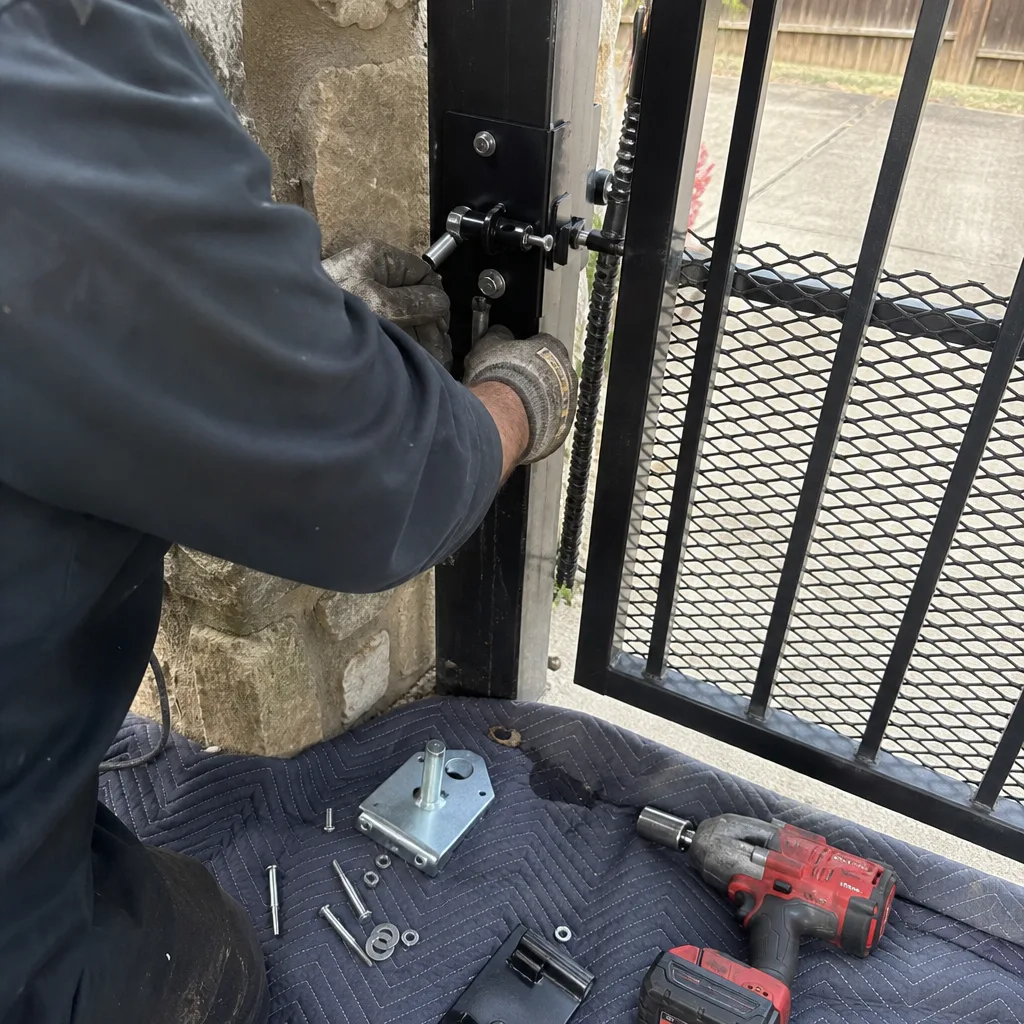
Garland’s master-planned communities, including Firewheel, SpringPark, and the residential sections around Lake Ray Hubbard, layer HOA covenants on top of city minimums. The city tells you what’s legal. The HOA tells you what’s allowed, and the two standards frequently conflict.
The most common conflict in Garland HOAs is material and finish. City code doesn’t care whether your repaired gate is steel, aluminum, or wood, painted black or left galvanized. An HOA architectural review committee can, and in Firewheel specifically there are published finish requirements for driveway gates visible from the street. We’ve repaired gates where the HOA required a specific black powder coat, and the repair invoice included a line item for finish matching. It’s not optional if the HOA has approval authority.
Another point of friction is automation timing. Some Garland HOAs restrict automatic gates from operating during certain hours, or require that a manual release be accessible from outside the property for emergency access. The city doesn’t care about either. The HOA does. When you’re adding automation to a manual gate in a covenanted community, the HOA approval process runs parallel to, and sometimes ahead of, the city permit process.
The sequence that works:
The conflict case we see most often: a homeowner gets city approval, installs a slide gate, and then discovers the HOA requires swing gates on that street. The city won’t help. The HOA won’t bend. The gate comes down. Checking the HOA covenants first costs an afternoon. Replacing a gate costs thousands.
Documentation When No Permit Was Required
Most gate repairs in Garland don’t require a permit, which means there’s no city file documenting the work. That absence is fine until it isn’t: an insurance adjuster asks what was done, a buyer asks for maintenance records, or a future technician needs to know what’s inside the control box.
The documentation habit we brought over from commercial access-control work solves this. On every gate repair, even a hinge replacement, we leave a written record of what was found, what was changed, and what was installed. The document includes the part numbers, the limit-switch settings, the photo-eye alignment measurements, and photos of the work in progress and the finished result. This is the same pattern we use on commercial sites, applied to residential driveways in Garland.
Why it matters, in three specific scenarios:
Under Haven Standard Clause 4 (Evidence on every job), every visit includes a documented photo record at no additional charge. That’s not a marketing line. It’s the working method: we photograph the found condition, the adjustment, and the finished state, and we leave the file with the homeowner and in our job record. In Garland, where the city has no file on most gate work, this private documentation is the only paper trail that exists.
Insurance Claims and Unpermitted Gate Work
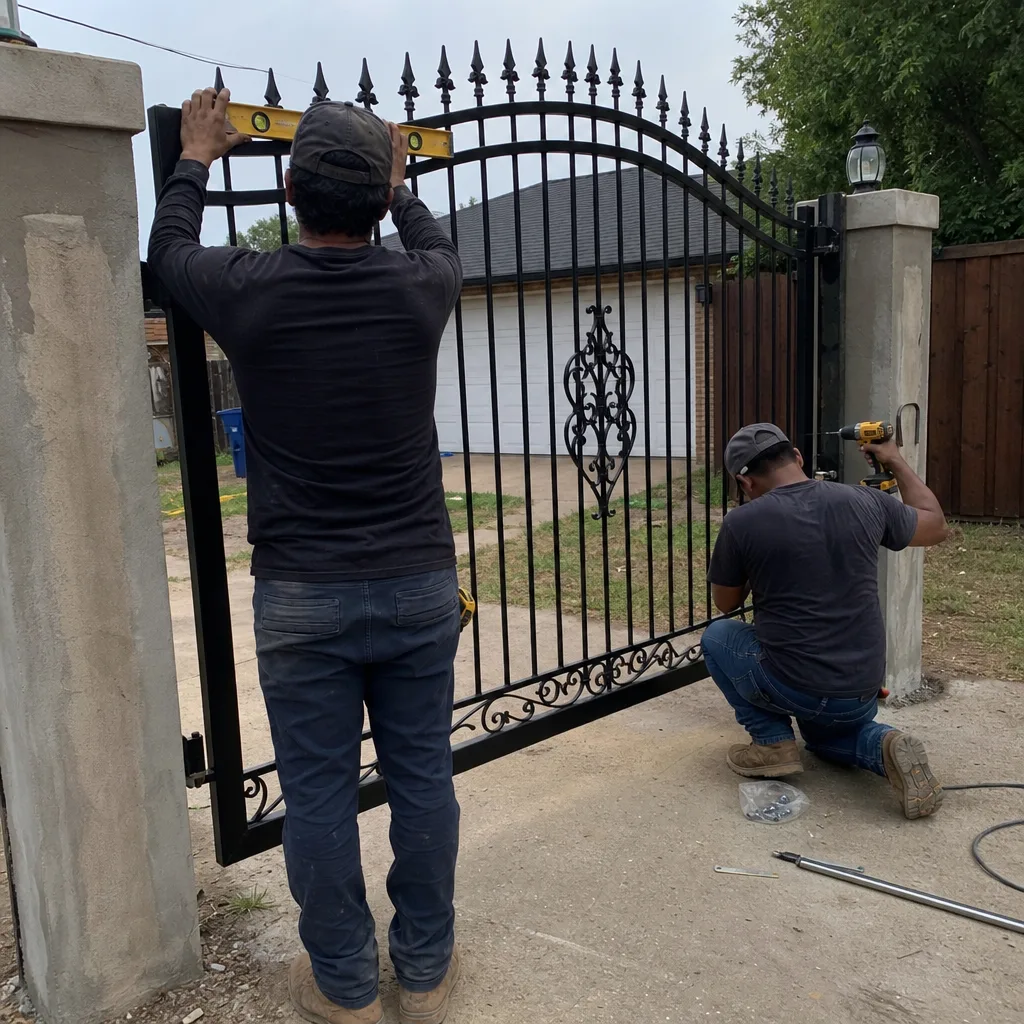
The insurance implication of unpermitted gate work is the least understood and most expensive part of this subject. A standard Texas homeowners policy covers liability for injuries on the property and property damage to the home. What it doesn’t cover as cleanly is loss caused by work that was done without a required permit, especially if that work contributed to the event.
Here’s the chain. A driveway gate in Garland with an automatic opener, installed without a permit, malfunctions. The gate closes on a vehicle, or worse, on a person. The homeowner files a liability claim or a property damage claim. The insurer investigates, finds that the automation was installed without a required permit, and now the claim is complicated. Texas insurers can deny coverage for losses caused by illegal or unpermitted work, and while they rarely deny outright for a permit issue alone, they can and do reduce settlement values and introduce subrogation arguments.
We’ve walked through this with Garland homeowners after the fact. The pattern is consistent: the injury or damage event is bad enough, and then the permit question makes it worse. The insurer asks for the permit number. There is no permit number. The insured is now explaining why not, and the claim adjuster is writing that down.
The protection is straightforward. If the work required a permit, pull the permit and keep the final inspection record. If the work didn’t require a permit, keep the written work order and photo documentation anyway. Either way, the homeowner has a paper trail that answers the adjuster’s questions. The absence of that paper trail is a risk that never pays off.
One more insurance note specific to Garland: some policies contain exclusions for property damage caused by unpermitted electrical modifications. A hardwired gate opener installed without an electrical permit can sit inside that exclusion language. When we install an operator in Garland, the electrical circuit is permitted and inspected, and the inspection sticker is visible proof that the work was done to code.
What a Garland Gate Inspection Actually Checks
When a gate project does require an inspection in Garland, the inspector isn’t checking aesthetics or personal preference. The inspection is a code-compliance pass, and the checklist is specific.
For a gate post replacement, the inspector verifies the post is set to the correct depth, usually 24 to 36 inches depending on soil and gate weight, and that the concrete footing meets the size specified in the approved permit. In Garland’s clay-heavy soils, which shift with moisture cycles, undersized footings are a common point of failure, and the inspector will look at the footing before the concrete is poured.
For gate automation, the electrical inspection covers the dedicated circuit, the GFCI protection, the grounding, and the operator’s listing. The inspector will also check that the required entrapment protection devices are present: a photo-eye or edge sensor that reverses the gate when something crosses the path or makes contact.
For a gate adjacent to a public right-of-way, the final inspection confirms the gate swings or slides within the property line and doesn’t encroach on the sidewalk or street. A gate that swings across a sidewalk when open is a code violation in Garland, and the fix is re-hinging or re-engineering the swing arc. This is also the point where the inspector checks that the gate doesn’t block a fire hydrant, a utility box, or a drainage swale.
The inspection is not adversarial. It’s a code check, and when the work is done correctly, it passes in one visit. The homeowners we’ve worked with in Garland who pulled the right permits generally found the process unremarkable: apply, pay, schedule, pass. The homeowners who skipped it found the process more expensive and more stressful later.
Common Mistakes to Avoid
When to Call a Professional
Some gate work is genuinely DIY: lubricating hinges, tightening a sagging frame, replacing a handle. But the line between maintenance and structural or electrical work is where the permit triggers live, and that’s where a professional’s experience with Garland’s specific code environment pays for itself. If your gate post is rotted at ground level, if you’re adding automation to a manual gate, if the gate sits near a property line or easement, or if the operator was installed before 2016 and lacks current entrapment protection, call someone who has done this work in Garland before. Our How to Hire a Gate Repair Contractor in Garland: A Step-by-Step Guide walks through exactly what to look for. The mistakes cost more than the service call.
Vance Gate Repair Garland offers free estimates for gate repair in Garland, and we walk through the permit question on every visit. We can tell you whether your specific gate crosses the permit threshold, what the fees look like, and what documentation you’ll want regardless. Call (469) 273-6254.
Frequently Asked Questions
No. Replacing a gate motor or operator on an existing automated gate is considered maintenance under Garland code, not new construction or new electrical installation. The circuit already exists, the operator is a listed appliance, and the swap doesn’t change the gate’s structure. No permit is required. You should still keep the receipt and a photo of the new operator’s label for your records. For questions about any motor brand, from LiftMaster to Elite to Mighty Mule, call (469) 273-6254 and we’ll tell you exactly what the job involves before anything starts.
Most residential gate and electrical permits in Garland fall in the $50 to $200 range depending on the scope. A simple electrical permit for a gate opener circuit typically runs under $150. A fence/gate permit for a post replacement is often under $100. The exact fee depends on the project valuation, and the city’s fee schedule is published, so you can check it before you apply. The bigger cost is the after-the-fact penalty if you skip the permit, which can double the base fee and add reinspection charges.
No. Adding automation to a manual gate in Garland requires an electrical permit because it involves a new permanently installed circuit. If the gate is adjacent to a sidewalk or public right-of-way, a gate permit may also be required to review the swing arc. This is the permit trigger that catches the most Garland homeowners, and the safest path is to check with the city’s building inspections department or have a professional confirm the requirements before ordering the operator.
UL 325 is the safety standard for automatic gate operators, and it governs entrapment protection: the photo-eyes, edge sensors, and reverse mechanisms that stop a gate from closing on a person or vehicle. It matters because Garland inspectors check for UL 325-compliant safety devices when they inspect a permitted automation project, and because the standard is the benchmark a court would use if an accident occurred. If your gate operator is old enough that it lacks current entrapment protection, upgrading the safety devices is the highest-value gate repair you can make.
Yes, if your property is in a covenanted community. HOA rules are a private contract, separate from city code, and they can restrict materials, finishes, heights, and automation features even when the city has no objection. Garland neighborhoods like Firewheel and SpringPark have active architectural review committees. Check your covenants before any gate work that changes the appearance or operation of the gate, and keep any HOA approval in the same file as your work records.
Your insurance claim gets harder. A Texas homeowners policy can exclude or reduce coverage for loss caused by unpermitted work, especially electrical work. The insurer will ask for the permit number. If you don’t have one, the adjuster documents the gap, and the settlement can be reduced or delayed while the unpermitted work is investigated. If the work didn’t require a permit, keep written documentation of it anyway: the work order, the photo record, the receipt. That paper trail answers the adjuster’s questions. For help assessing your specific gate’s exposure, call (469) 273-6254.
The Bottom Line
Most gate repair in Garland doesn’t require a permit. Hinge replacements, motor swaps, welding, and limit-switch adjustments are maintenance, and the city has no file on them. But the exceptions are specific and expensive to miss: post replacement, new automation on a manual gate, and any work near a property line or easement. When a permit is required, pulling it is cheaper than defending the absence of it later, whether the later moment is a home sale, an insurance claim, or an injury event. When a permit isn’t required, written documentation still protects you, and that’s the habit that separates a gate that’s just fixed from a gate that’s provably fixed. Browse our more guides & resources for additional homeowner protection strategies.
Written by Adrian Vance, Owner at Vance Gate Repair Garland, serving Garland since 2014.