
Last updated September 20, 2026
Free on-site gate assessment - hinges, posts, and your LiftMaster or Nice gate operator checked before anything is quoted
The assessment is free and the quote is the invoice.
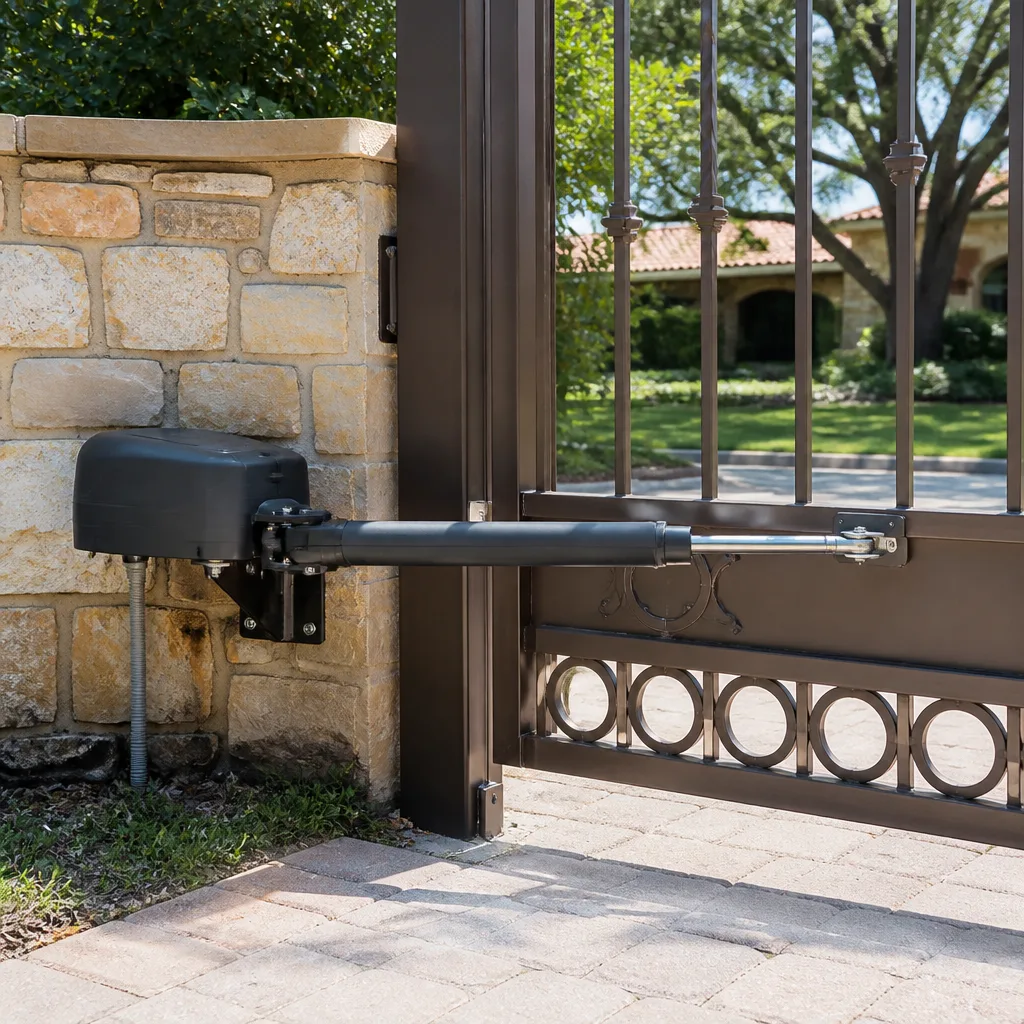
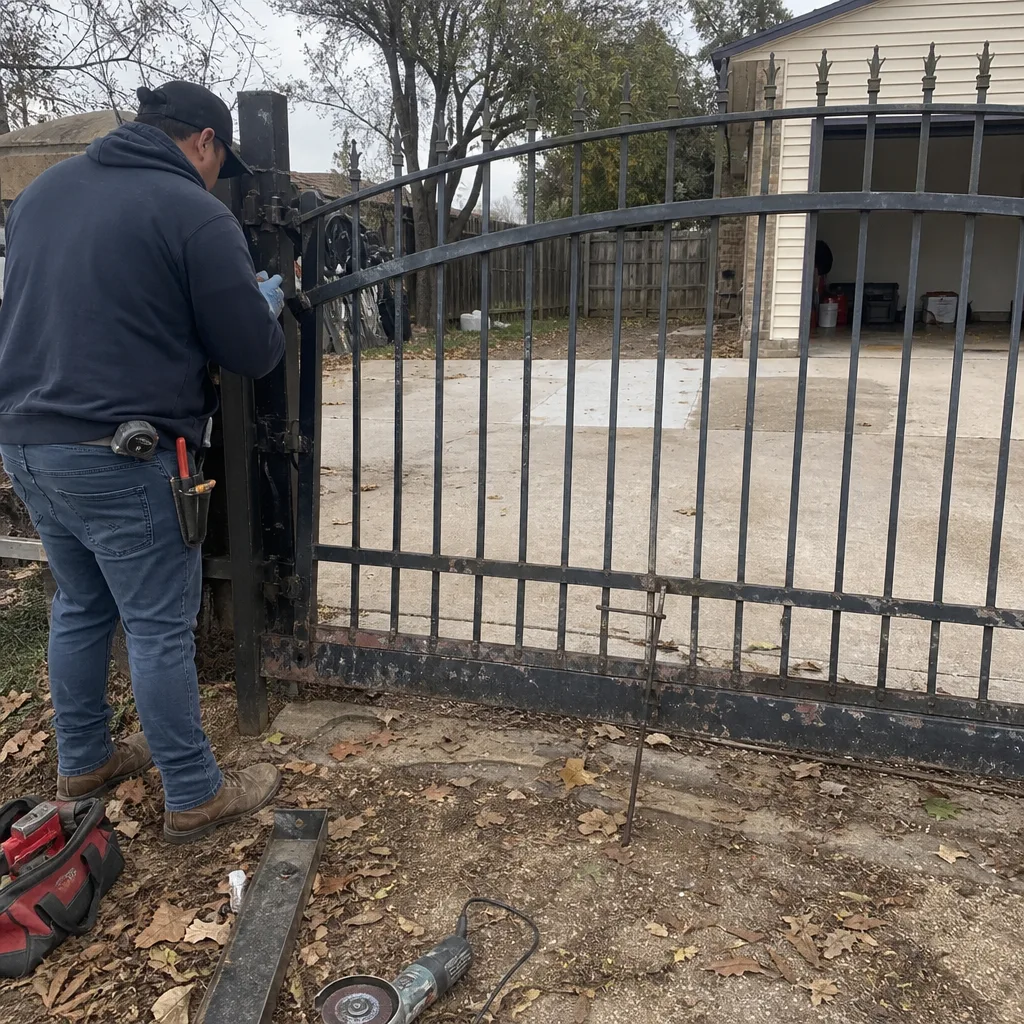 Before
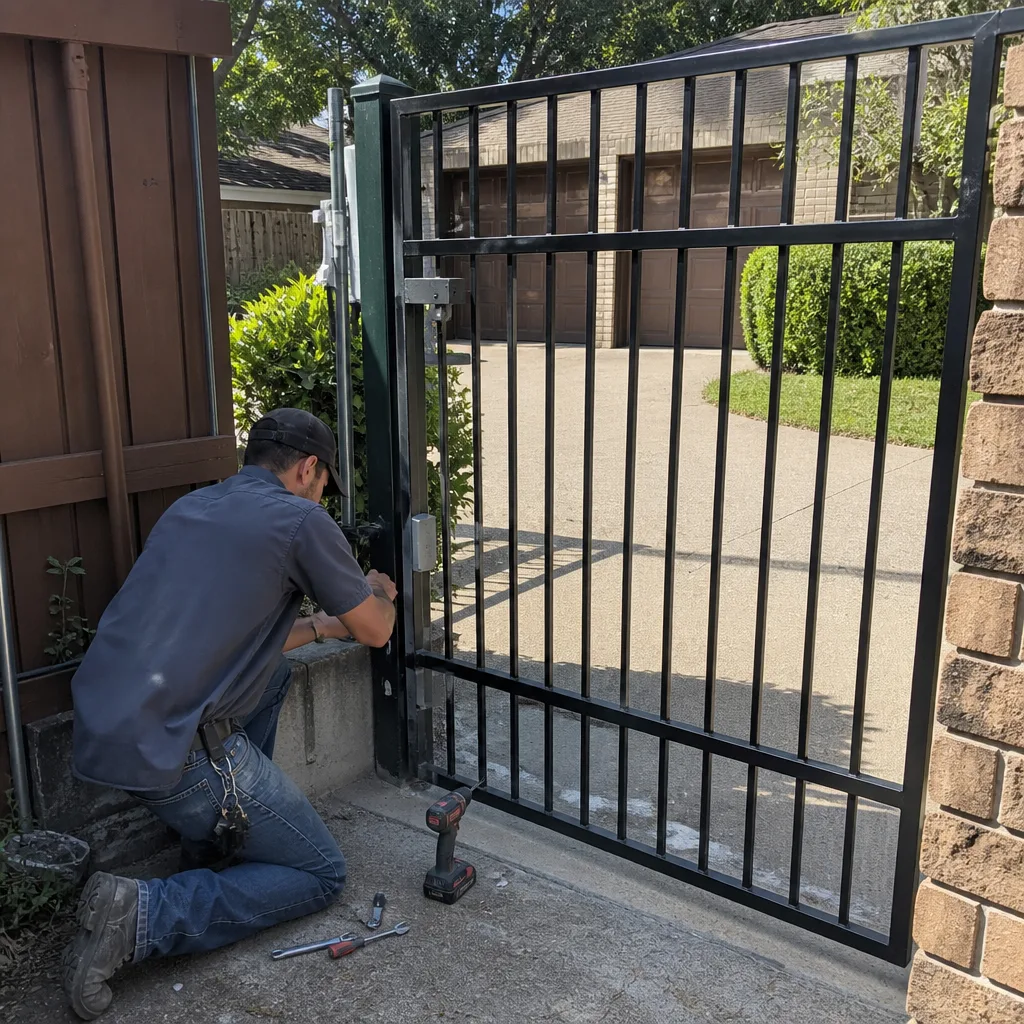 After
After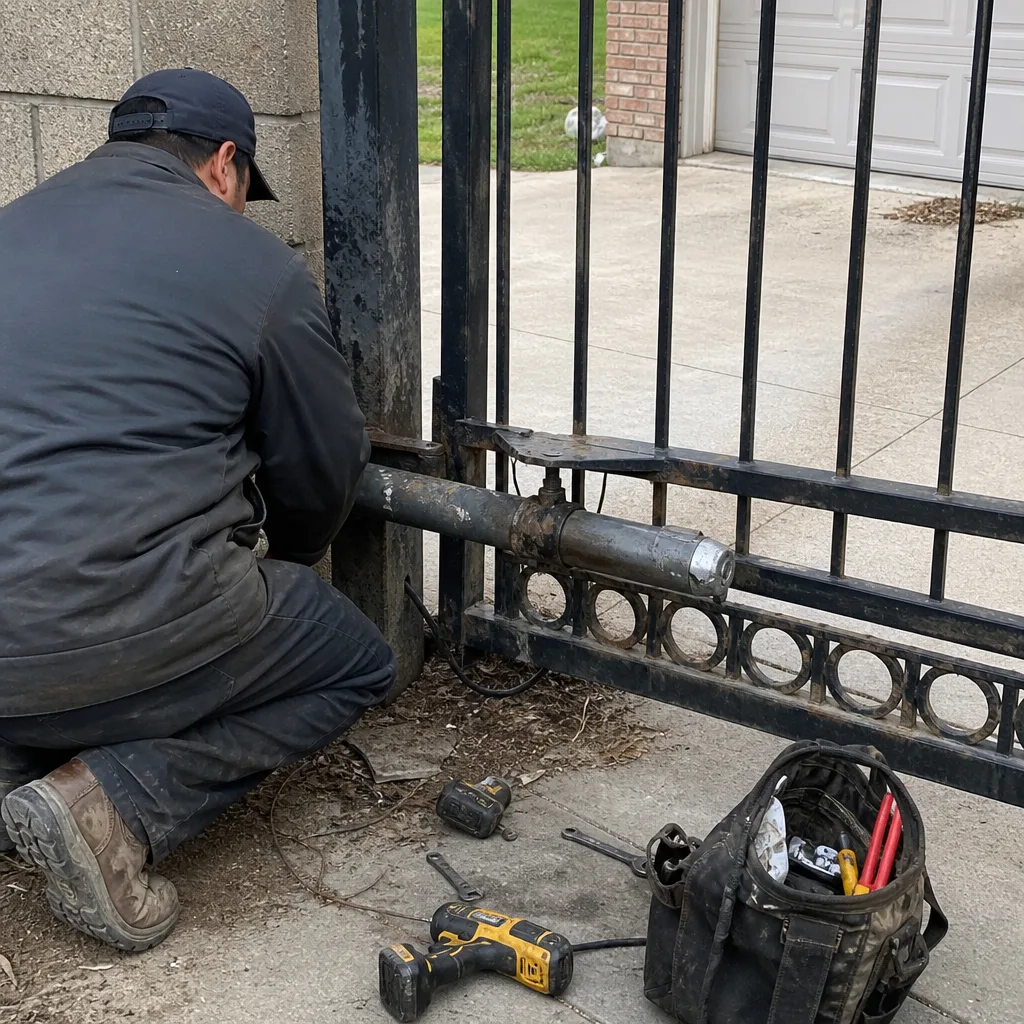 Before
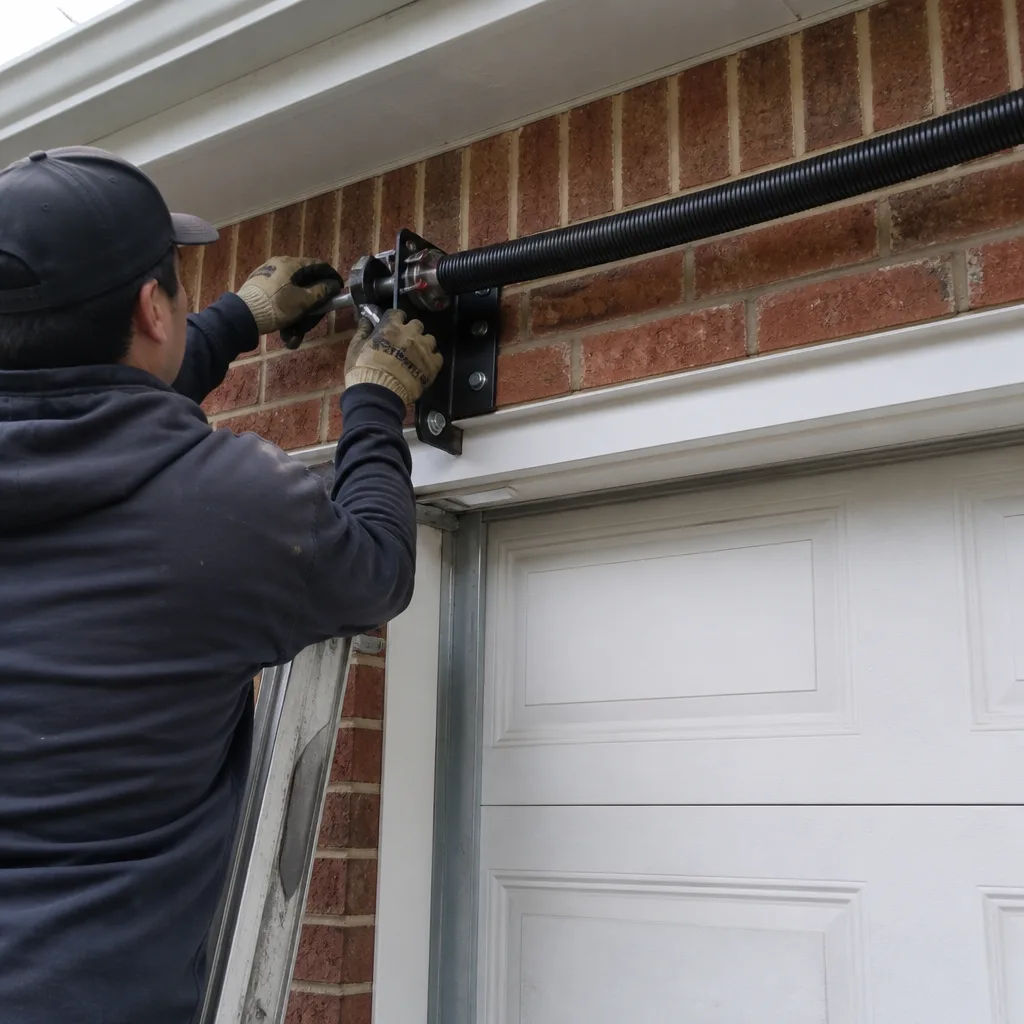 After
After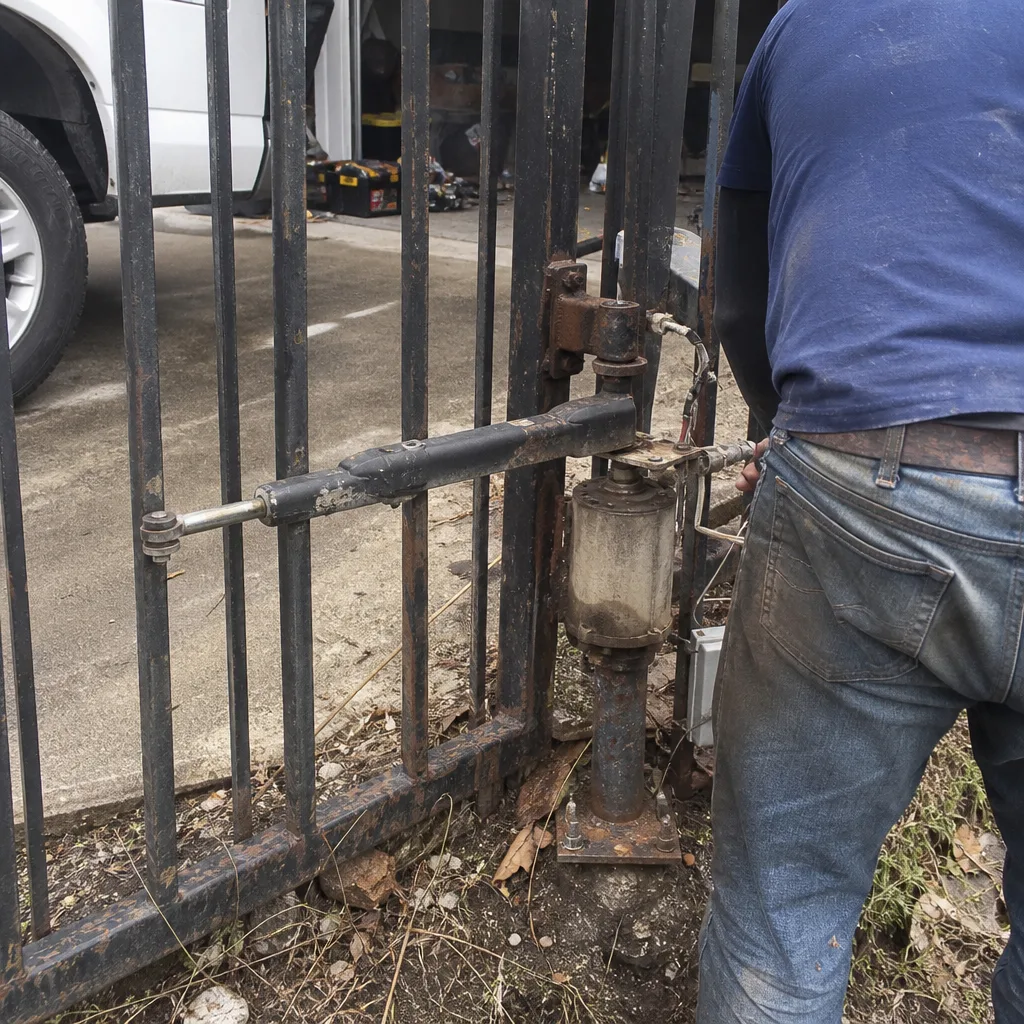 Before
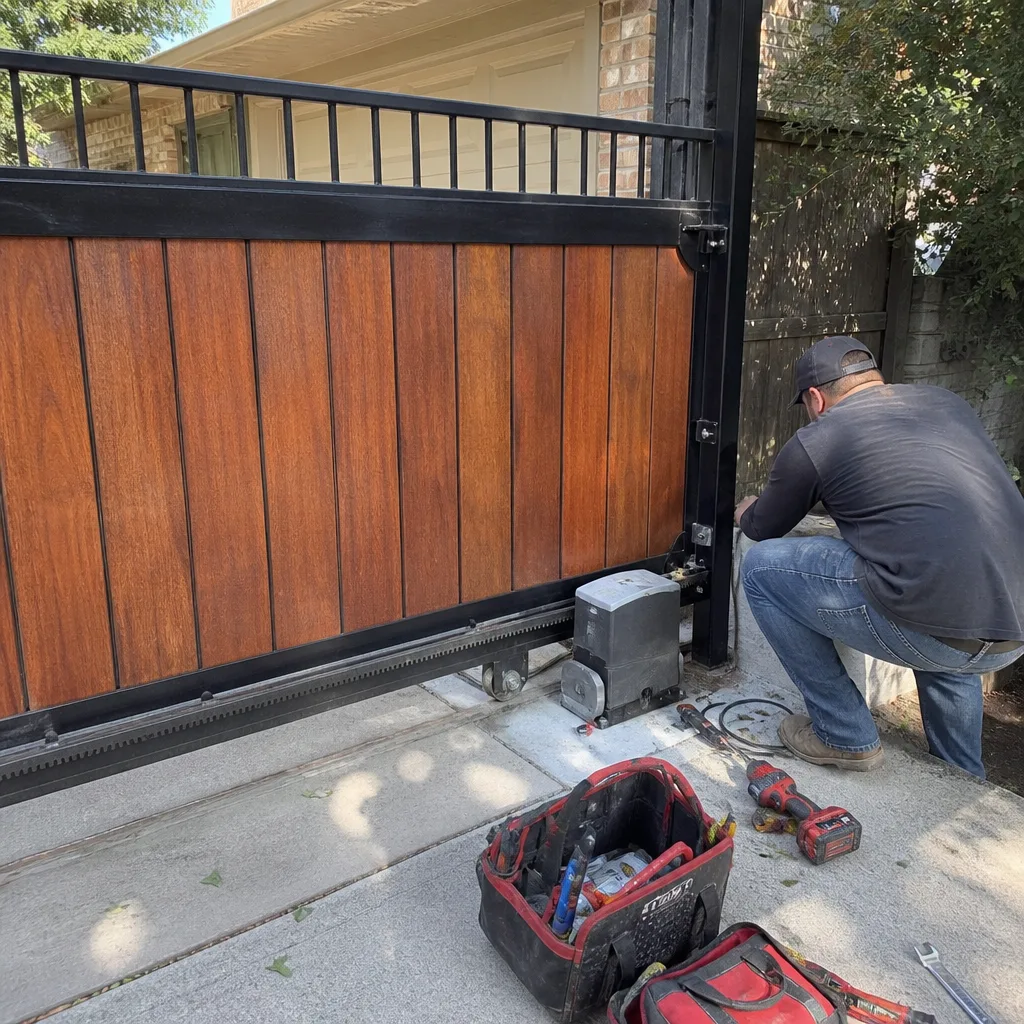 After
AfterGate Repair Warning Signs: A Garland Homeowner’s Reference Guide
A gate that hesitates before opening is telling you something. Whether it’s a limit switch drifting, a capacitor failing, or a post heaving out of plumb determines whether you need a $35 part or a concrete crew – and you can narrow it down before making a call. Most gate failures in Garland announce themselves weeks before the gate stops working entirely. The problem is that homeowners read those signals the wrong way, conflating a cosmetic issue with a structural one, and end up paying for a diagnosis they didn’t need. This guide teaches you to read your gate’s failure language first.
Quick Answer
Gate repair warning signs in Garland TX fall into two categories: cosmetic (surface rust, faded paint, minor squeaks) and structural (post movement, weld fractures, motor strain, limit-switch drift). A gate that moves slowly, reverses mid-travel, grinds on close, or fails to latch is showing you a specific electrical or mechanical fault, and you can identify which system is failing by watching when the symptom occurs – at startup, mid-cycle, or during the final six inches of travel. Documenting three data points (what the gate does, when it does it, and what it sounds like) will save you money whether you repair it yourself or call a professional. For how to hire a gate repair contractor in Garland, knowing these details gets you a faster, more accurate quote.
Table of Contents
- The Operational Symptom Matrix: What Your Gate Is Actually Saying
- Visual Indicators Sorted by Urgency: Rust Is Not All the Same
- Post Heave vs. Post Lean: Soil-Driven vs. Impact-Driven Movement
- Garland-Specific: Why Controllers Throw Fault Codes in August
- How to Document Warning Signs Before Calling for Service
- What These Warning Signs Cost to Fix in Garland
- Brand-Specific Notes: What We See on FAAC, BFT, Linear, and Viking Gates
- Common Mistakes to Avoid
- When to Call a Professional
- Frequently Asked Questions
BeforeAfterThe Operational Symptom Matrix: What Your Gate Is Actually Saying
A gate motor does not have a check-engine light. What it has is behavior. And behavior is diagnostic if you know which system produces which symptom. In Garland, where driveway gates are almost uniformly steel or ornamental iron on cast-aluminum posts or steel posts set in concrete, the failure pattern is remarkably consistent: electrical components fail from heat and surge, mechanical components fail from soil movement and lubrication breakdown, and the two get blamed for each other constantly.
Here is what four common symptoms point to:
- Slow to open, especially cold. This points to a capacitor that is losing its ability to hold a charge, or a motor bearing that has started to bind. A healthy capacitor delivers a hard burst of voltage at startup. A failing one delivers a weak pulse, and the gate accelerates like a car with a dying battery. Capacitors are inexpensive – typically $15 to $40 for the part – but if the motor has been straining against a failing capacitor for months, the windings may have overheated, and now you are looking at a motor replacement.
- Reverses mid-travel, then completes the cycle on the second attempt. On a FAAC or BFT swing gate, this is almost always a limit-switch or obstruction-sensor issue. The control board reads the reversal as an obstruction event and backs the gate off, then tries again. If there is no obstruction – and in Garland, the most common phantom obstruction is a misaligned photo-eye after a strong north wind – the limit switch has drifted out of adjustment. We see this most often on gates that face east-west on corner lots, where afternoon sun heats the actuator and causes micro-expansion in the linkage.
- Won’t latch, or latches only with a hard push. This is rarely the latch itself. In Garland’s clay-heavy soil, the gate post that carries the latch has usually moved a few degrees, changing the strike alignment. The latch becomes the victim of a post problem. Repairing the latch without addressing the post means the gate will latch today and fail again in six weeks.
- Grinds on close, especially the final third of travel. Grinding is mechanical, not electrical. The gear train in the operator is binding, or the hinge bearings have worn to the point where the leaf drags on its pivot. On Linear and Viking slide gates, a grind on close often means the chain has stretched and is now riding on the sprocket teeth at an angle. Left alone, a stretched chain will eventually jump the sprocket and the gate will free-slide – which on a two-car driveway means the gate ends up in the street.
What matters here is the pattern within the symptom: when the behavior happens tells you more than what the behavior is. A gate that grinds only during the final six inches of close has a different problem than one that grinds across the full travel.
Visual Indicators Sorted by Urgency: Rust Is Not All the Same
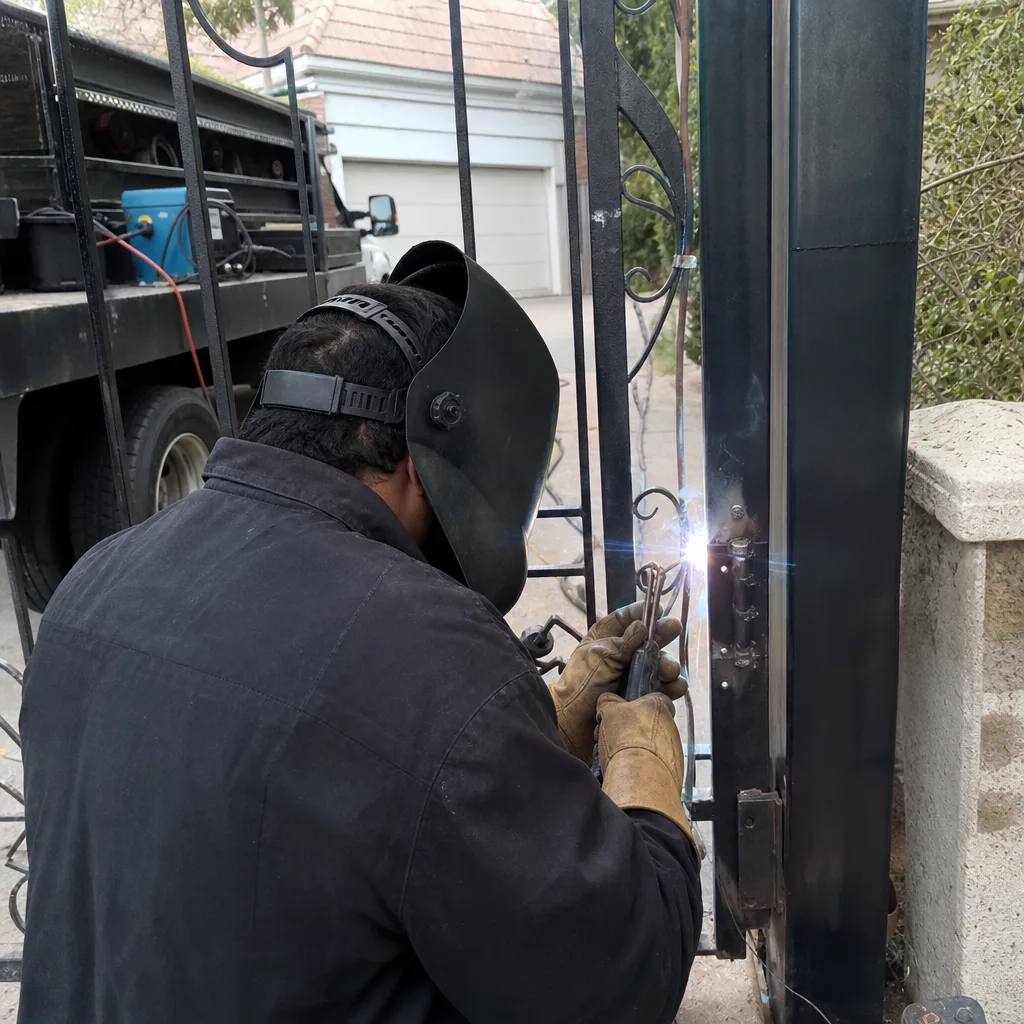
Rust is the most misdiagnosed warning sign in gate repair. In Garland, where humidity sits near 70% for much of the year and summer storms roll through weekly, surface rust is a cosmetic nuisance, not a structural emergency. But there are three distinct rust patterns, and they have completely different failure timelines.
Rust streaking at welds. This is the least urgent. When moisture sits in the tiny crevice where a picket meets the top rail, it creates a thin rust film that streaks downward. It looks alarming. It is not. The steel underneath is intact, and the fix is wire-brushing, priming, and repainting. In our experience across Garland neighborhoods, from Firewheel to Springpark, this accounts for the majority of rust-related service calls, and it is almost always cosmetic.
Rust at hinge pins. More urgent. Hinge pins take the full weight of a gate leaf that can exceed 400 pounds. When rust forms at the pin, it means moisture has penetrated the bearing surface. The hinge starts to bind, the motor starts working harder to move the same weight, and the amp draw rises. We have measured a 30% increase in amp draw on gates with rusted hinge pins versus clean ones. This is a bearing problem waiting to become a motor problem, and it should be addressed within weeks, not months.
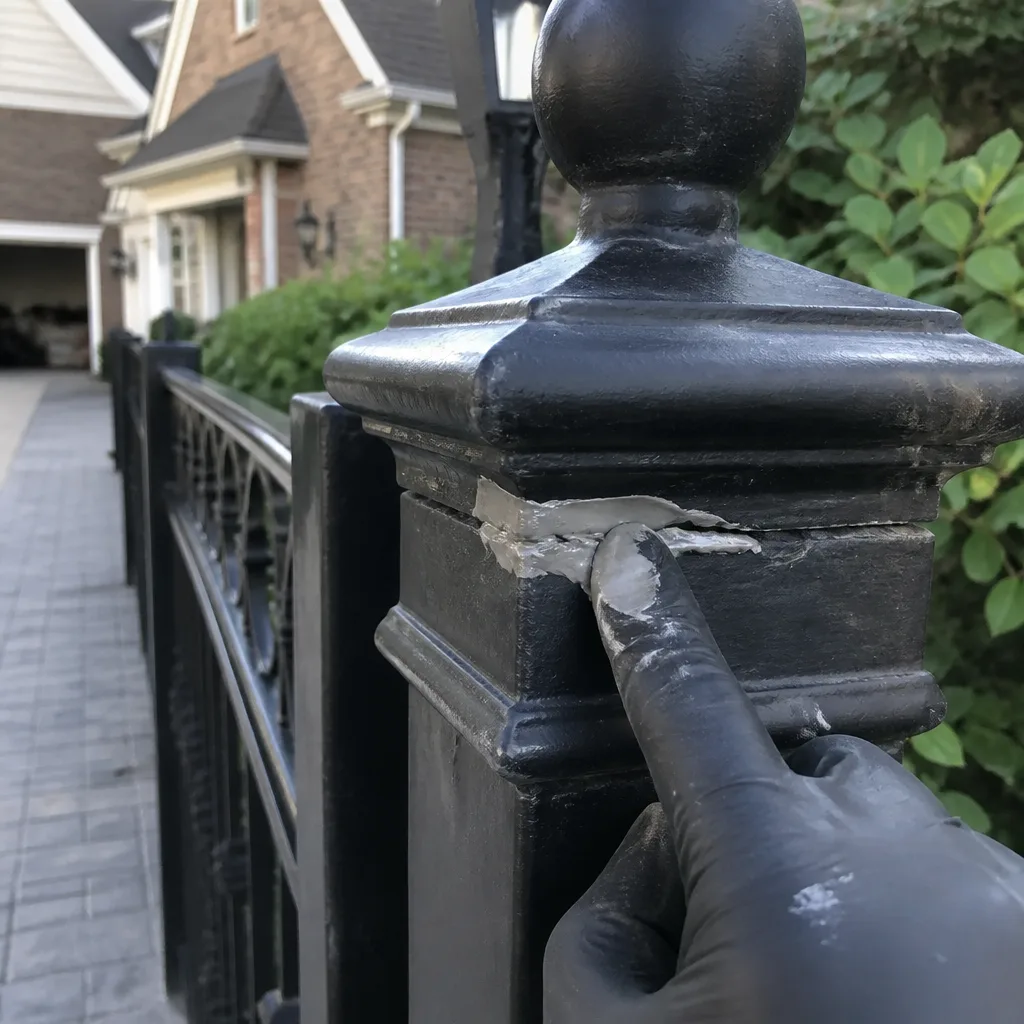
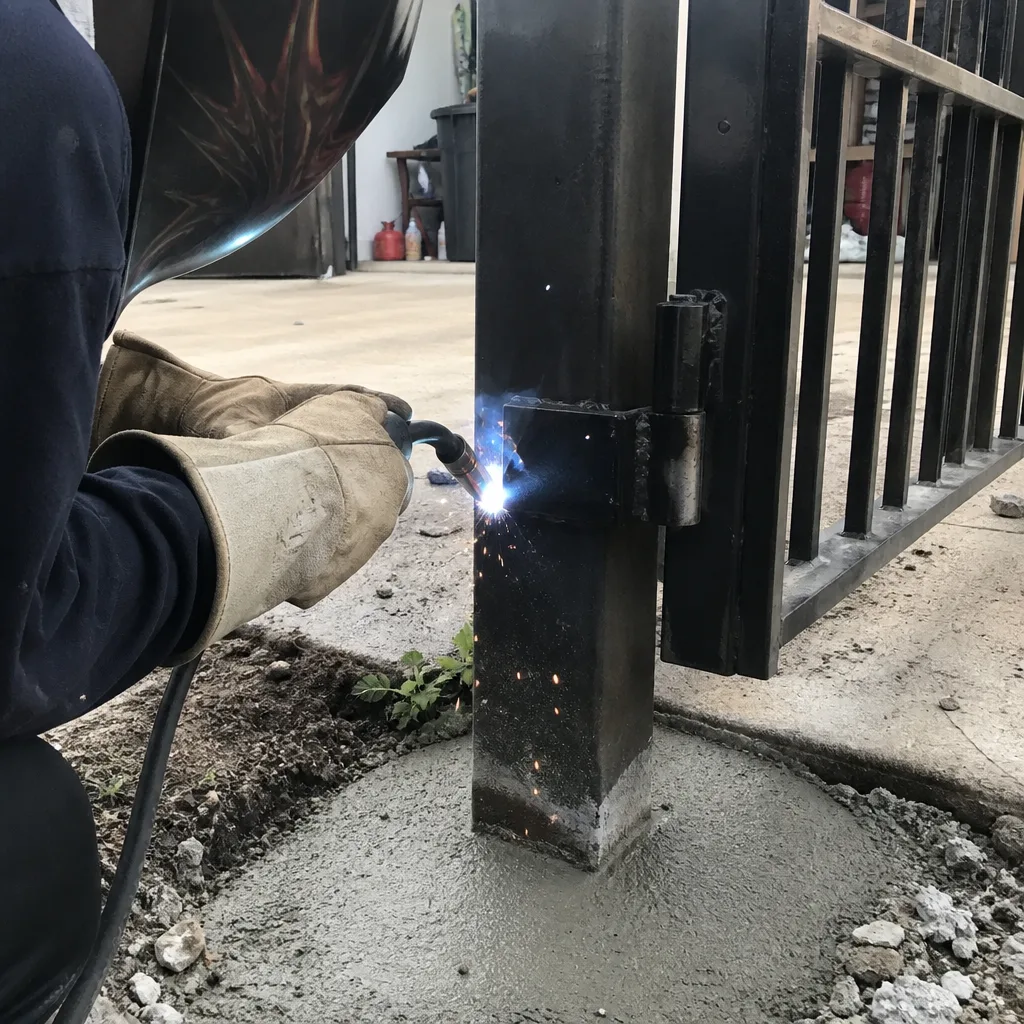
Rust at the base plate or post collar. This is the urgent one. The base plate is where the post meets the concrete footing, and it is the point of greatest leverage when the gate swings. Rust here attacks the structural connection, not the surface. When we see rust flaking at the base of a post in Garland, we dig down to check the weld between the post and the reinforcing plate. If that weld is compromised, the post is no longer resisting the gate’s momentum – the concrete is. And concrete does not bend; it cracks. A gate that has lost its base-plate weld will eventually pull the post out of the ground, and that is a $2,000-plus repair instead of a $300 weld repair.
Photograph rust before you call. A photo that shows where the rust is – weld, pin, or base – tells a technician more than a description ever will.
Post Heave vs. Post Lean: Soil-Driven vs. Impact-Driven Movement
Two gates can look identical from the street – both posts tilted, both gates dragging – and have completely different causes and completely different repair bills. In Garland, the distinction comes down to soil.
Post heave is soil-driven. Garland sits on expansive clay soils that swell when wet and shrink when dry. In a wet spring, the soil around a gate post expands, lifting the post a fraction of an inch. In a dry August, the soil contracts, and the post settles back down – but rarely to exactly where it started. Over multiple wet-dry cycles, the post walks upward and tilts outward. The telltale sign is a hairline crack in the concrete collar around the post, running parallel to the gate leaf. The post itself is usually not damaged; the footing has simply failed to resist the soil’s movement. Repair scope: remove the gate leaf, pour a deeper footing with a wider base, reset the post. In Garland, a standard post reset with new concrete typically runs $450 to $800 per post, depending on depth and whether the old footing has to be excavated or can be abandoned in place.
Post lean is impact-driven. A delivery truck clips the gate, a teenager leans on it, a gust of wind catches a fully-open leaf. The post is bent or the weld at the base plate has fractured. The soil did not move; the post did. The telltale sign is a clean shear line at the base plate, or a visible bend in the post itself. Repair scope: straighten or replace the post, and often replace the base plate. This runs $300 to $600 per post if the post is salvageable, and more if the post is a custom finial design that must be matched.
Here is the practical distinction for a Garland homeowner: post heave gets worse slowly and seasonally. Post lean appears suddenly and stays. If you woke up one morning and the gate was dragging, that is lean. If the gate has been dragging more each season for two years, that is heave.
Garland-Specific: Why Controllers Throw Fault Codes in August
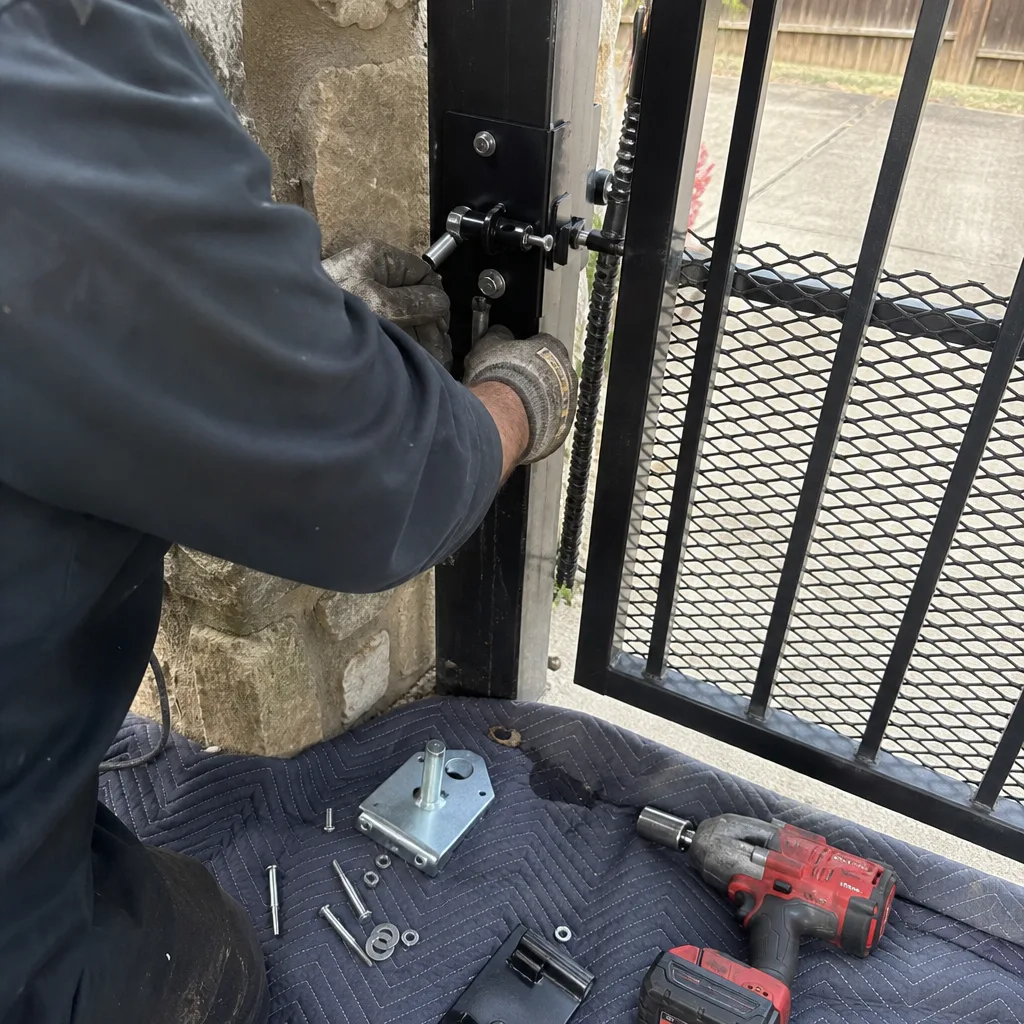
Every August in Garland, we see the same pattern: gate controllers that have worked flawlessly for eleven months start throwing fault codes. The gate reverses for no reason. The remote works intermittently. The keypad goes dead. Then the homeowner resets the breaker, the fault clears, and everything works again until the next 100-degree afternoon.
What is happening is thermal expansion. Control boards are mounted inside metal enclosures. In an August afternoon, the inside of that enclosure can reach 140 degrees or more, especially if the gate faces west and absorbs direct sun from 2 p.m. onward. Thermal expansion causes solder joints to flex microscopically. A hairline fracture in a solder joint works fine at 80 degrees and fails open at 140. That is why the fault clears when the enclosure cools.
The cycling pattern – faults in the heat, clear at night, repeat – is the diagnostic signature of a thermal fault. It is not a ghost in the machine, and it is not a reason to replace the controller. The fix is usually a $120 to $200 solder repair on the affected joint, or replacement of the electrolytic capacitors, which degrade faster in sustained heat. In our experience, Garland gate controllers that live in direct sun tend to need capacitor replacement at the six- to eight-year mark, about two to three years earlier than shaded controllers.
If your gate throws codes only on hot afternoons and is fine the next morning, document the outside temperature at the time. That single data point tells a technician more than a week of “sometimes it works, sometimes it doesn’t.” It is also the difference between a $40 capacitor replacement and a $600 controller replacement that was never actually needed.
How to Document Warning Signs Before Calling for Service
Most service calls start with a phone call that goes something like: “My gate is acting weird.” That is a starting point, but it is not a diagnosis. The homeowner who documents three specific things before calling will get a more accurate quote and a faster repair, and in Garland, where service calls can involve a 30-minute drive across town, that documentation matters.
Here is the documentation sequence we recommend, whether you are calling Gate Repair in Garland or any other shop:
- Record the symptom trigger. When does the gate misbehave – first opening of the day, after sitting open for an hour, only in direct sun, only after rain? The trigger narrows the fault to a system. A gate that is sluggish first thing in the morning points to a capacitor; a gate that fails only after rain points to a water-ingress problem in a low connection box.
- Record the symptom itself. Use precise verbs: “hesitates,” “reverses,” “grinds,” “clunks,” “buzzes without moving.” “Being weird” is not a symptom. “Reverses at the halfway point and then completes on the second attempt” is a diagnosis-grade description.
- Photograph the gate from three angles. One full-gate shot from the driveway side, one close-up of the hinge pins, one close-up of the base plate where the post meets the concrete. These three photos reveal rust, weld cracks, and post movement that a verbal description will miss.
- Photograph the control board. Open the operator cover and photograph the board with the fault LED visible if the gate is currently faulting. If there is a blinking light pattern, film a short video of the blink sequence. Blink codes are specific to the brand – FAAC uses one pattern, BFT another – and a 10-second video can identify the fault code before a technician ever arrives.
- Note the gate’s age. If you know the installation year, write it down. A 20-year-old operator with a failing capacitor is a repair. A 20-year-old operator with a failed control board and a rusted chain is a conversation about replacement versus repair, and you want that conversation to happen with facts on the table, not as a surprise visit.
Under our own operating standards, every visit includes a documented photo record – what was found, what was adjusted, what was replaced. That record is left with the homeowner and filed in the job record. When a future issue arises, the photo log means no one has to rediscover what was already known. For a homeowner documenting warning signs before calling, the same principle applies: photographs create a record that outlasts your memory of what the gate was doing.
What These Warning Signs Cost to Fix in Garland
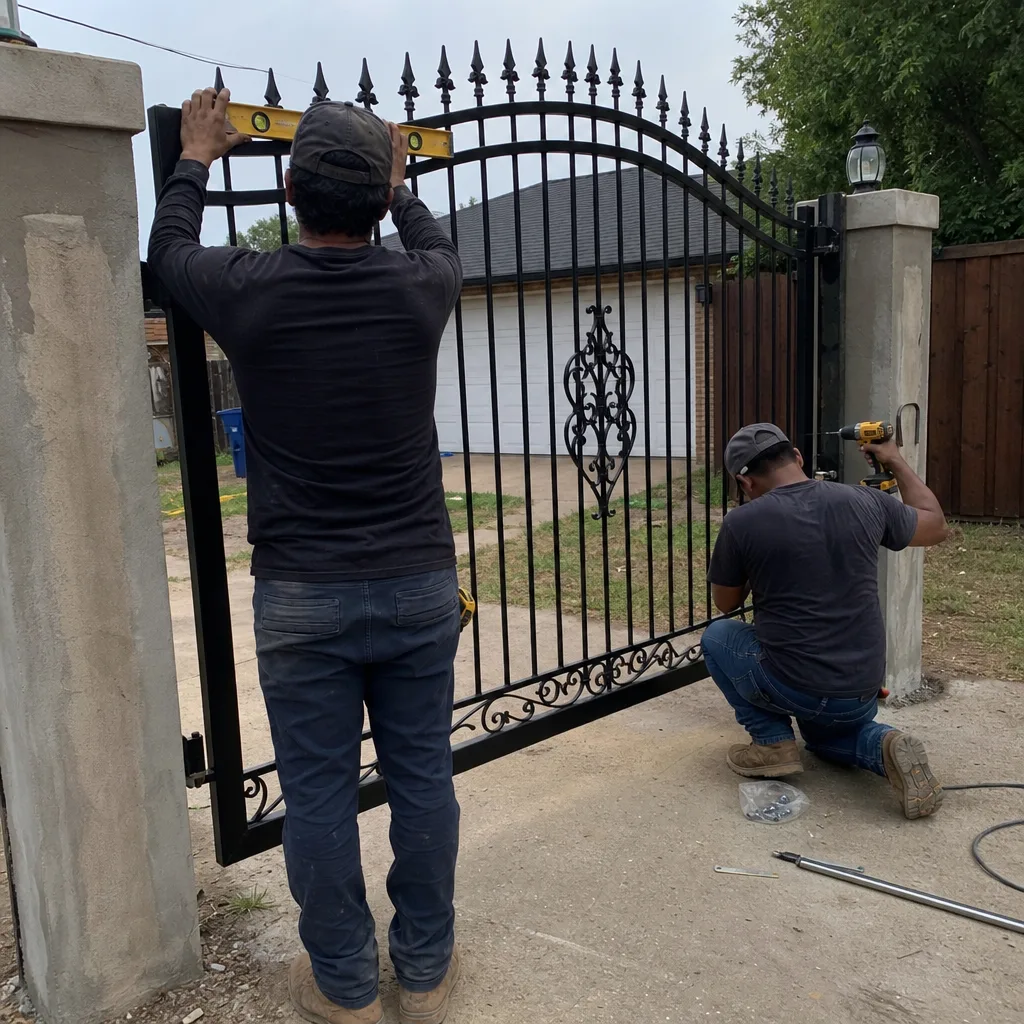
Knowing what a warning sign points to is useful. Knowing what it costs to fix is what actually allows a Garland homeowner to make a decision instead of dreading a surprise invoice. Here is what we see in the Garland market, based on the work our techs complete across the city:
- Capacitor replacement: $90 to $160 total, including service call and labor. If the motor has been straining against a bad capacitor for months and the windings are scorched, a full operator replacement runs $850 to $1,650 depending on the brand and the arm configuration.
- Limit-switch adjustment or replacement: $110 to $190. This is the fix for a gate that reverses mid-travel or overshoots the closed position. It is a 30-minute job in most cases.
- Photo-eye realignment: $75 to $125. This is the fix for an obstruction-sensor fault caused by wind-driven misalignment, which we see frequently in Garland after storm fronts push through from the west.
- Hinge-pin replacement with hardware: $180 to $320 per leaf, depending on gate weight and whether the old pins can be extracted or need to be drilled out. This fixes the grind-on-close symptom when the bearing surface has rusted.
- Post reset with new concrete footing: $450 to $800 per post in Garland, where expansive clay soil requires deeper footings than, say, the sandier soils of East Texas. This is the fix for post heave.
- Chain replacement on a slide gate: $220 to $380, including tensioning and sprocket wear check. This is the fix for the grind-on-close on a Linear or Viking slide gate with a stretched chain.
- Control board solder or capacitor repair: $120 to $200. This is the fix for the August-only fault code from thermal expansion.
Every one of these prices gets written down and handed over before any work starts. That is not a marketing line; it is how the job is priced. If you want a comprehensive look at what a full gate installation involves, start with our Gate Installation in Garland page, which covers the scope from footing pour to final programming.
Brand-Specific Notes: What We See on FAAC, BFT, Linear, and Viking Gates
Most Garland homeowners do not know which brand of operator sits inside the box at the end of the driveway. But the brand determines the failure pattern, and knowing the pattern tells you whether to expect a $100 fix or a $1,000 decision. We service nine major automation brands, but we see certain failures cluster around certain manufacturers.
FAAC swing operators are workhorses, and when they fail, it is usually the capacitor first, then the limit switch. We see FAAC operators on older Garland homes in the Duck Creek and Country Club areas, where the gates were installed in the 2000s and the operators are now 15 to 20 years old. A FAAC that reverses mid-travel is almost always a limit-switch drift, not an obstruction. The fix is quick.
BFT swing operators are sensitive to voltage fluctuation. In Garland neighborhoods with older overhead service drops, or homes at the tail end of a long distribution feeder, BFT boards will throw low-voltage faults during peak air-conditioning load in August. The controller is fine. The power supply is marginal. A voltage monitor at the panel will confirm it, and the fix is often a dedicated circuit rather than a new board.
Linear slide operators are common on Garland acreages and ranch-style properties east of Brand Road. The chain tension is the weak point. We replace more Linear chains than any other slide-gate component. The symptom is a distinct clunk-clunk-clunk rhythm as the gate moves, especially under load.
Viking swing and slide operators are tough, but their limit switches sit in a position where Garland’s summer humidity can cause contact corrosion. A Viking gate that works fine in dry weather and fails after a rain is showing a moisture-related limit-switch fault, and the fix is a sealed-switch replacement, not a new operator.
If your gate has an operator from one of these brands and you are seeing the symptoms described, you have already narrowed the diagnostic field. A technician who knows the brand knows where to look first. For more detail on operator-specific repair, see our Gate Motor & Opener in Garland page.
Common Mistakes to Avoid
- Lubricating the gate as a first response. Spraying lubricant on a gate with a binding hinge buys a week and costs a diagnosis. The lubricant masks the symptom – the grind, the drag – without touching the cause. By the time the symptom returns, the bearing wear has advanced further. Diagnose first, lubricate second.
- Ignoring seasonal fault codes because “it goes away.” The August thermal fault that clears overnight is a warning sign, not a ghost. Every thermal cycle widens the solder fracture or degrades the capacitor further. The failure that occurs on a July afternoon when you need to leave for a flight is the same failure that was showing itself in intermittent bursts the previous August.
- Replacing the operator because the gate is slow. A slow gate can be a capacitor, a hinge, a chain, a low-voltage supply, or a gear train. Replacing the operator is the most expensive fix, and in our experience it is the necessary fix in fewer than 20% of slow-gate cases. The other 80% are repairable at a fraction of the replacement cost.
- Power-washing the gate without protecting the control box. A pressure washer aimed at a junction box can inject water through a gasket that has held for years. In Garland, where homeowners pressure-wash gate posts and driveway approaches through the spring, water ingress is a top five cause of electrical gate faults.
- Fixing the latch without checking the post. If the gate will not latch, the latch is the symptom and the post is usually the disease. A new latch on a post that has heaved a quarter-inch means the new latch will fail the same way the old one did. Check the post alignment before you replace any hardware.
- Guessing at repair parts without testing the board. We have seen homeowners replace a limit switch based on a forum post, only to find the real fault was a control-board relay. The $30 part they bought was never the problem, and now the board is harder to diagnose because a new variable was introduced. Test first.
- Waiting to document a warning sign because “it’s still working.” A gate that still works is the cheapest gate to fix. The moment a symptom appears, that is the moment the repair is least expensive and the diagnosis is most reliable. Warnings signs do not improve with age.
When to Call a Professional
Some gate problems are visible and mechanical: a rusted hinge pin you can see, a chain you can tighten, a photo-eye you can realign with a screwdriver. Other problems are invisible and electrical, and those are the ones where a homeowner should stop and call. If your gate throws fault codes that clear and return, if the operator hums without moving the gate, if the gate has come off its track, or if a post has moved visibly from plumb, call a professional. These are not more guides & resources for DIY fixes; they are safety issues. A 400-pound gate leaf that free-swings because a chain jumped a sprocket can injure a person or a pet before you ever hear it happen.
Vance Gate Repair Garland offers free estimates in Garland – call (469) 273-6254 and a real person will answer, any hour. We will walk you through what you are seeing, tell you what it points to, and give you a written price before anyone picks up a tool.
Frequently Asked Questions
A gate that will not open in Garland typically costs between $110 and $320 to repair, depending on whether the fault is a failed capacitor, a drifted limit switch, or a blown fuse on the control board. If the motor has been straining against a failing component for months, a full operator replacement runs $850 to $1,650. Call (469) 273-6254 for an exact quote – estimates are free and the price is written before any work starts.
Your gate reverses before fully closing because the control board is receiving an obstruction signal, which on most Garland gates means either a misaligned photo-eye or a limit switch that has drifted out of adjustment. The two are separated by a simple test: block the photo-eye with your hand and see if the gate behaves differently. In most cases, the fix is a $75 to $190 adjustment.
You can tell post heave from post lean by looking at the crack pattern at the base. Heave produces a hairline crack in the concrete collar around the post and moves seasonally; lean produces a clean shear line at the base plate weld and appears suddenly after an impact. Heave is a soil problem and needs a deeper footing; lean is a structural problem and needs a post repair.
Most gate operators in Garland can be repaired rather than replaced. Capacitors, limit switches, photo-eyes, control-board solder joints, and chains are all replaceable components, and the repair typically runs $75 to $380 versus $850 to $1,650 for a new operator. The only operators that genuinely require replacement are those with burned motor windings or a cracked gear housing, which we see in fewer than 20% of service calls.
Your gate fails only in the heat because thermal expansion is opening a micro-fracture in a solder joint on the control board, or because a capacitor has degraded to the point where it cannot hold charge at high temperature. This is the classic Garland August failure pattern, and the fix is usually a $120 to $200 board repair rather than a controller replacement. Document the outside temperature when the gate fails; that single data point identifies the fault.
Yes, we give free estimates for gate repair in Garland. The price is written down and handed to you before any work begins, so you know the cost before you commit. Call (469) 273-6254 and a live person will answer at any hour.
The Bottom Line
Your gate speaks a diagnostic language, and the words are the symptoms: slow, reversed, grinding, unlatched, faulted. Learning to read those symptoms as clues to a specific system – capacitor, limit switch, hinge, post, control board – turns a vague “something is wrong” into a decision you can price out. In Garland, where clay soil heaves posts and August heat stresses control boards, the warning signs follow predictable seasonal patterns that a homeowner can document in five minutes with a phone camera. The gate that still works is the cheapest gate to fix. The moment it starts talking to you, listen.
For a full picture of what our repair service covers, start with the Vance Gate Repair Garland home page or jump directly to Gate Repair in Garland for service details. We have been repairing and installing gates in Garland since 2014, and every job leaves with a written record of what was found and what was done.
Written by Adrian Vance, Owner at Vance Gate Repair Garland, serving Garland since 2014.